The Unseen Role of the 5th Commandment: Honor, Legacy, and God’s Government

A Commandment Often Understood Too Narrowly
After my father’s death, I found myself reflecting on the lessons he tried to instill, the values he lived out, and the influence he had on my life. At the same time, I couldn’t help but notice the many broken families around me. These reflections brought deep clarity to the 5th commandment—“Honor your father and your mother.” This command is often interpreted narrowly as a call to respect, obedience, or caregiving. While those elements are certainly important, the commandment holds a deeper and more expansive role—one that applies to everyone, at every stage of life, and regardless of childhood circumstance.
It connects generations, supports godly governance, and ultimately reflects our honor toward God Himself. Whether parents are present, absent, faithful, or flawed, the 5th commandment calls us to honor them in ways that reflect righteousness, character, and obedience to God. Understanding its broader implications reveals why this commandment may be one of the most foundational in all of Scripture.
The Micro View: Interpersonal Honor
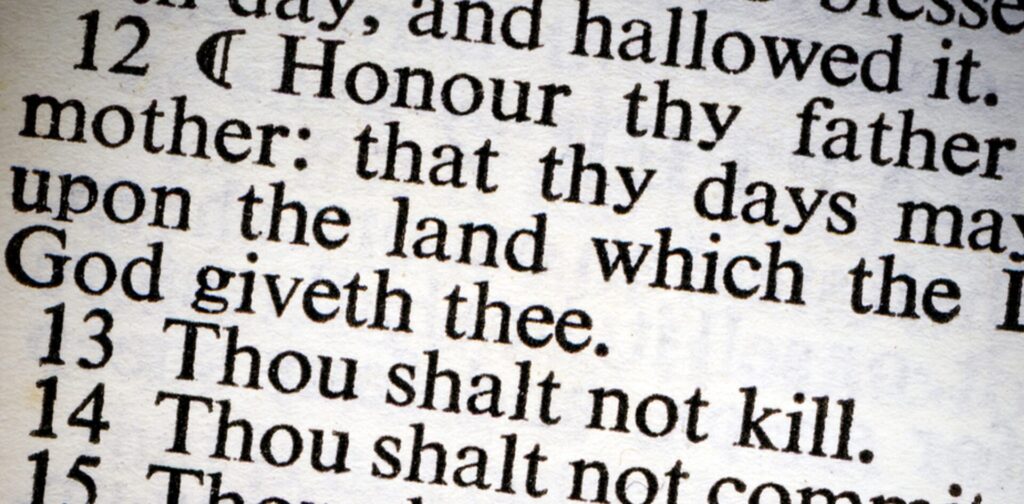
At its most basic level, the 5th commandment calls for relational honor. As children and even as adults, we are to show respect, care, and attentiveness to our parents. This includes how we speak to them, how we treat them in times of need, and how we speak about them to others. The Apostle Paul reiterates this in Ephesians 6:1–3:
“Children, obey your parents in the Lord, for this is right. ‘Honor your father and mother’—which is the first commandment with a promise—‘so that it may go well with you and that you may enjoy long life on the earth.’”
This is the interpersonal aspect we’re most familiar with—personal, close, and direct.
The Macro View: Representational Honor
What’s less often explored is the representational, or macro, view of honor. A child carries the name, values, and legacy of their parents. Their behavior in the world—whether righteous or foolish—reflects on the family. Proverbs emphasizes this:
“A wise son brings joy to his father, but a foolish son brings grief to his mother.” (Proverbs 10:1)
“The father of the righteous will greatly rejoice; he who fathers a wise son will be glad in him. Let your father and mother be glad; let her who bore you rejoice.” (Proverbs 23:24–25)
In this way, we honor our parents not only in direct interaction but also through our character and actions in life. This kind of honor brings glory to parents even when they are not present—or even if they are no longer living. It is similar to how an ambassador represents a nation: a child represents a family.
But this broader view of honor also offers an important and often overlooked encouragement: it provides a faithful path for those whose parents did not fulfill their God-given role. Not everyone grew up in a godly, stable, or nurturing home. Interacting respectfully on a personal level can be difficult—or even painful—when parents were absent, harsh, negligent, or abusive. For many, this interpersonal side of the command becomes a stumbling block—not because they reject God, but because their parents broke trust.
Yet Scripture shows that the deeper honor of the 5th commandment is not limited to positive experiences or sentimental family ties. It is ultimately rooted in how we live, the choices we make, and the righteousness we pursue. By aligning our lives with God’s ways, we bring honor to our earthly parents—even if they were deeply flawed—because we honor the intent of the family structure God designed. In doing so, we honor our true Father in heaven, whose character we reflect and whose family we represent.
This macro perspective expands the commandment beyond personal sentiment and makes it a calling rooted in spiritual maturity, grace, and the healing work of God’s Kingdom.
Tied to God’s Law and Covenant Blessings
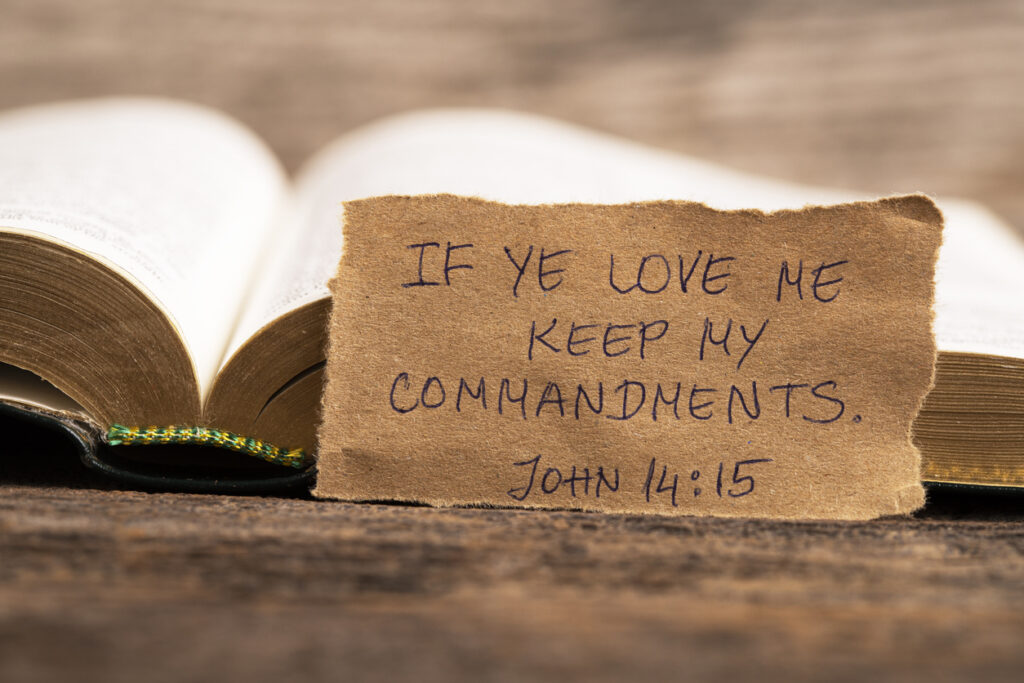
What’s implicit in this form of honor is God’s law. Proverbs 1:8 and 6:20 refer to the “law of your father” and the “commandment of your mother.” This literary style points beyond mere household rules—it’s about parents passing on God’s instruction.
And the promise attached to the 5th commandment—“that your days may be long upon the land”—echoes covenant blessings found throughout the Law. Deuteronomy 5:33 says:
“Walk in obedience to all that the LORD your God has commanded you, so that you may live and prosper and prolong your days in the land.”
Living in accordance with God’s way brings honor to your family and extends outward – literally to include national and spiritual blessings.
This principle transcends our individual parental situations. Whether we had faithful parents or not, whether they’re present or absent, we can still honor them by living in a way that reflects God’s righteousness.
The Overlooked Key: Instruction Must Precede Honor
Embedded within this command is an implied responsibility: honoring one’s parents on a broader level is ultimately expressed in how we interact with others according to God’s law—and children can only live out what they know. The implications are huge. For this commandment to be properly kept, responsibility falls on all involved in a child’s upbringing, starting with the parents.
Parents must actively train their children, or they risk training them to break the 5th commandment. Righteousness is not automatically absorbed—it must be taught.
Many assume that good character will naturally rub off on children. But Scripture warns otherwise. Deuteronomy 6:6–9 emphasizes the diligent teaching of God’s ways:
“These commandments that I give you today are to be on your hearts. Impress them on your children. Talk about them when you sit at home…”
Failing to teach often leads to generational collapse. Judges 2:10 notes:
“Another generation grew up who knew neither the LORD nor what he had done for Israel.”
Even faithful individuals like Eli and David failed to pass on God’s ways effectively to their children, leading to devastating consequences. In this light, the 5th commandment may be one of the most neglected in modern times—its disregard contributing to the collapse of the entire moral framework.
Shared Responsibility: A Churchwide Mandate

Teaching the next generation isn’t only a parental duty—it’s a shared responsibility. Titus 2 outlines how older men and women are to teach and support the younger. The Church should function as a spiritual family, encouraging and upholding God’s model for households.
That includes youth camps, Bible studies, mentorship, and daily conversations. Each of us has a role to play in helping the next generation grow in wisdom and righteousness. In doing so, we support both parents and the structure God put in place.
This is godly government in action—family-style governance that begins in the home and expands outward. “Children, obey your parents,” and “Fathers, do not provoke your children to anger,” reveal the layered nature of this authority. It is not coercive but supportive, nurturing, and constructive.
A Spiritual Bridge: From Earthly Parents to Our Heavenly Father
Finally, when we consider the placement of the 5th commandment, it serves as a bridge. The first four commandments deal with our relationship with God, while the last five focus on human relationships. The 5th commandment sits at the intersection.
Honoring our earthly parents ultimately points to honoring our Father in heaven. This commandment holds a dual role—it teaches us how to treat authority on earth and prepares us to submit to divine authority. In this way, it encapsulates the two greatest commandments: to love God and to love your neighbor.
The family is the training ground for discipleship. Honoring that family structure, both within the household and through the community, leads us back to honoring the One who created it.
A Commandment Worth Rediscovering
Far from being a mere call to politeness or childlike obedience, the 5th commandment lays the foundation for generational faithfulness, godly governance, and spiritual alignment with our Heavenly Father. It calls us to live righteously, teach diligently, and support one another in a covenant community.
In doing so, we don’t just honor our earthly parents—we reflect the family structure of the Kingdom of God itself.